Get us involved before the architect's drawings are finalised
The best time to speak to a technology integrator is before the structural drawings are signed off — ideally before planning is submitted if the project involves any significant structural work. This isn't about selling you more technology. It's about ensuring that the building's structure, routing and plant room allocation accommodate the systems you'll want, now or in the future.
Changes to drawings are free. Changes to a finished building cost thousands. An hour of conversation at design stage prevents years of frustration — or a very expensive retrofit.
The plant room: give it proper space
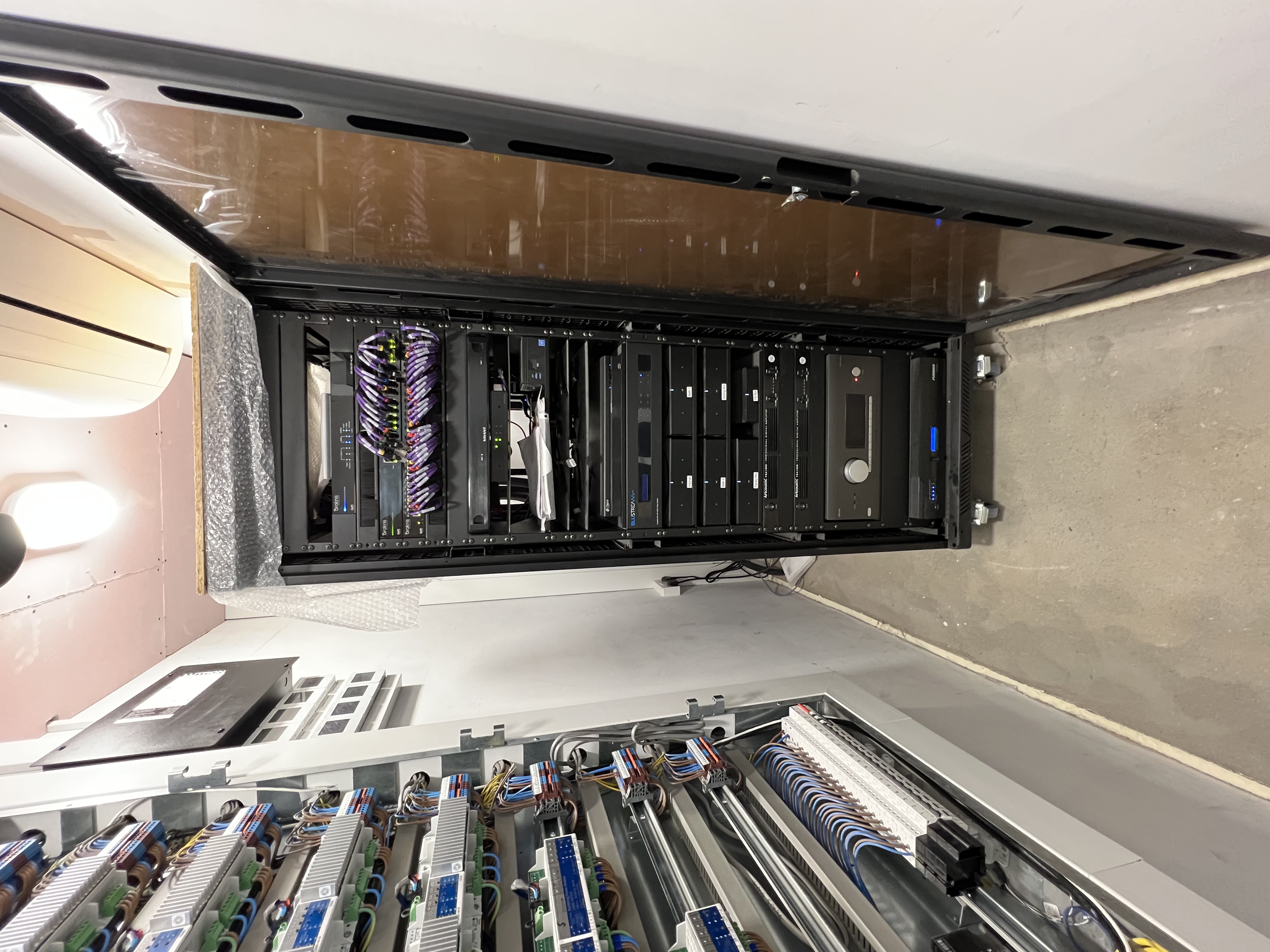
Every quality technology installation needs a central home — a plant room, riser cupboard, or dedicated equipment space where racks, servers, amplifiers, routers, and control processors live. This space needs to be large enough, properly ventilated (electronics generate heat), and accessible without disturbing a finished room.
The common mistake is treating technology equipment as an afterthought that can share the boiler cupboard. A well-planned plant room has enough rack space for current equipment plus room to grow, a dedicated ventilation route, a clean power supply (ideally with a small UPS for network equipment), and cable entry points to all parts of the building. Getting this right at design stage costs almost nothing. Retrofitting it costs a great deal.
Run conduit everywhere you might want cable
Conduit — plastic tube run through walls, floors and ceilings — is the most cost-effective technology investment in any new build. It costs almost nothing at first fix and gives you the ability to pull any cable you want, at any point in the future, without touching the finished fabric of the building.
Every room should have conduit from the ceiling (for speakers and lighting control wiring) and from the skirting level (for data and AV connections) back to the plant room. Conduit between floors is particularly valuable — running cables between storeys in a finished building is one of the most disruptive retrofits we undertake.
Even if you have no intention of installing smart home technology now, the conduit costs a few hundred pounds and keeps every option open. We've lost count of how many clients have come to us three or four years after moving into a house, wanting to add technology, and the answer has to be "yes, but it'll be disruptive and expensive" precisely because nobody ran conduit at first fix.
A practical rule: run at least one 25mm conduit from every room back to the plant room. Two conduits per room is better. They're cheap, they're invisible once plastered, and they're invaluable the moment you want to do anything with cables in the future.
Structured data cabling: Cat6A as standard
Wi-Fi is excellent, but a wired data connection is always faster, more reliable, and lower latency. Every room where a screen, streaming device, games console, or working computer might live should have at least two wired Cat6A data points. Bedrooms, studies, sitting rooms, kitchen — all of them.
Cat6A (as opposed to Cat6 or Cat5e) supports 10 Gigabit speeds and is correctly specified for a building that will last decades. The marginal cost difference over Cat6 is trivial. Specifying correctly now means the cabling won't be a bottleneck as network demands increase over time.
These data points all terminate at a patch panel in the plant room, where they connect to the network switch and router. This is standard structured cabling practice — it's how offices have been wired for thirty years, and it's the right approach for a quality home.
Speaker cable at first fix
If there's any chance you'll want in-ceiling or in-wall speakers — for multiroom audio, for a cinema room, for garden audio — run the speaker cable at first fix. It's inexpensive cable, it runs quickly when walls are open, and the alternative is chasing channels into finished plasterwork. Run cable to every room where you might conceivably want audio, even if you don't install speakers immediately. Cap the ends, label them, and they're ready when you want them.
The same applies to outdoor speaker positions. If you're landscaping, agree speaker cable routes before the groundworks are finished. Digging up a new terrace to run cable is a painful and avoidable experience.
Lighting control wiring
If you intend to have intelligent lighting control — Lutron, Rako, KNX, or any other system — the lighting wiring needs to be designed for that system from the start. This is not the same as standard domestic lighting wiring. The cable routes, the switch positions, the number of circuits per room, and how circuits are homerun back to dimmers all differ between a standard installation and one designed for intelligent control.
Getting an electrician to wire a house for standard lighting and then converting it to intelligent control is expensive and often involves significant remedial work. Have the conversation with us before the electrician is on site.
Cinema room: structural considerations
If you want a dedicated cinema room, the structure of that room matters as much as the equipment in it. Acoustic isolation — preventing sound from the cinema disturbing the rest of the house, and preventing noise from other areas entering the cinema — requires structural decisions: resilient mounts, acoustic plasterboard, independent floor structures. These decisions need to be made before the room is built, not after.
Similarly, a projector needs a structural fixing point in the ceiling rated for its weight. A screen needs a clean wall or ceiling mount. Ventilation for the projector needs to be planned so hot air is extracted properly. None of this is difficult, but all of it needs to be in the build specification from the start.
Planning a New Build or Major Renovation?
Get us involved early — before drawings are finalised, before the electrician is on site. A conversation at the right time saves significant cost and delivers a significantly better result.