Why bother with whole-home audio at all?
The question sounds slightly facetious, but it's worth answering properly. Portable Bluetooth speakers are excellent. So why go further?
The answer is convenience and quality, in roughly equal measure. A properly installed whole-home system means music follows you through the house without you doing anything — the kitchen, the utility room, the garden, the master bathroom, the landing — all playing the same thing, or different things, at the touch of one button. You never carry a speaker upstairs, never find it uncharged, never lose it behind a sofa cushion. It's just there, like the lights.
The quality point matters more in some rooms than others. In a kitchen or bathroom, a well-positioned in-ceiling speaker sounds dramatically better than any Bluetooth speaker at the same price point — partly because it's designed for the space, and partly because the amplifier driving it isn't constrained by battery size.
Level 1: Sonos with in-ceiling speakers
The starting point for most clients who want a proper installed system. A Sonos Amp drives a pair of passive in-ceiling speakers in each room — the speakers are wired back to the amp, which lives in a cupboard or rack, and the whole thing is controlled by the Sonos app or any Sonos-compatible interface.
Sonos is genuinely excellent at this level. The app is one of the best in the industry, the multi-room synchronisation is reliable, and the streaming integration is comprehensive — Spotify, Apple Music, Tidal, BBC Sounds, AirPlay 2, and many more all work natively. For most clients who want five or six rooms of audio, Sonos is the right answer and doesn't need to be more complicated than that.
Speaker choice matters. We work with Origin Acoustics, Krix and LEON for in-ceiling installations — brands that make speakers specifically for this application, with ceiling-mount baffles, paintable grilles, and driver configurations that work well at typical ceiling heights. The difference between a good in-ceiling speaker and a budget one is significant and audible.
In-ceiling vs in-wall: in-ceiling speakers are the default choice for most rooms and sound excellent for general listening. In-wall speakers — mounted at ear height — can give a more conventional stereo image and work well in dedicated listening rooms or studies. Both need speaker cable running back to the amplifier during first fix.
Level 2: dedicated multiroom amplification
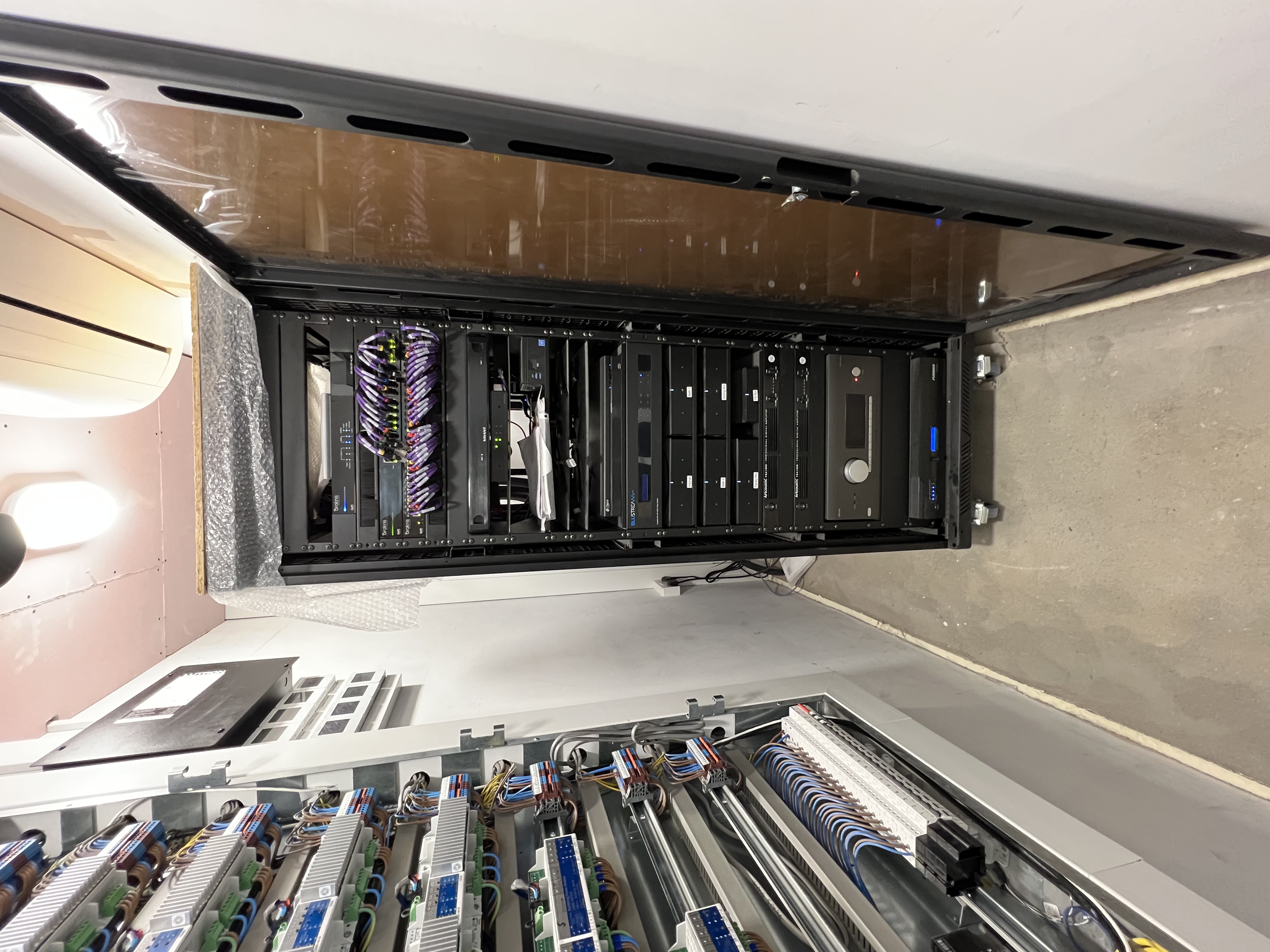
For larger homes or clients who want higher audio quality, a dedicated multiroom matrix amplifier replaces the individual Sonos amps. Systems from AudioControl offer clean, high-powered amplification across many zones simultaneously, with better audio performance than any streaming-device-based amplifier.
At this level you might also introduce a higher-tier streaming source — a network music player that handles lossless audio, internet radio and streaming at a quality level above what an integrated device achieves. The result is a system that sounds noticeably better in listening-critical spaces (a study, a sitting room with good speakers) while remaining Sonos-like in convenience.
Level 3: full integration with smart home control
At the top of the range, audio becomes part of the wider smart home ecosystem. Rather than a separate app for music, everything — lights, blinds, heating, AV, audio — is controlled from a single Savant or KNX interface. A "Good morning" scene dims up the bedroom lights, raises the blinds and starts a playlist in the kitchen. A "Cinema" scene turns on the projector, closes the blinds and mutes every other audio zone in the house automatically.
This level of integration requires planning from the outset and is most cost-effective in new builds or whole-house renovations where all the trades are working together. But the result — a house that feels genuinely joined-up — is qualitatively different from a collection of separate systems that happen to be in the same building.
What about the speakers themselves?
Speaker selection is worth taking seriously. The common mistake is specifying a premium amplifier and then fitting budget speakers — the weakest link in any audio chain determines the ceiling on what the system can sound like. We take time to match speakers to room size, ceiling height, ceiling material and acoustic character.
For most living spaces and kitchens, a quality 6.5" or 8" two-way in-ceiling speaker is exactly right. For bathrooms, a smaller IP-rated speaker handles the moisture. For a dedicated listening room or a large open-plan kitchen-diner, we might specify a stereo pair of larger in-walls, or supplement in-ceiling speakers with a subwoofer for low-frequency extension.
The cable run matters too — speaker cable needs to be the right gauge for the run length, and it needs to be the right type for in-wall installation (typically CCA or OFC, to Building Regulations standards). These are details we specify correctly as a matter of course.
Thinking About Whole-Home Audio?
Whether you want two rooms or twenty, we'll design a system that fits your home, your budget and how you actually listen to music. Get in touch for an honest conversation.